























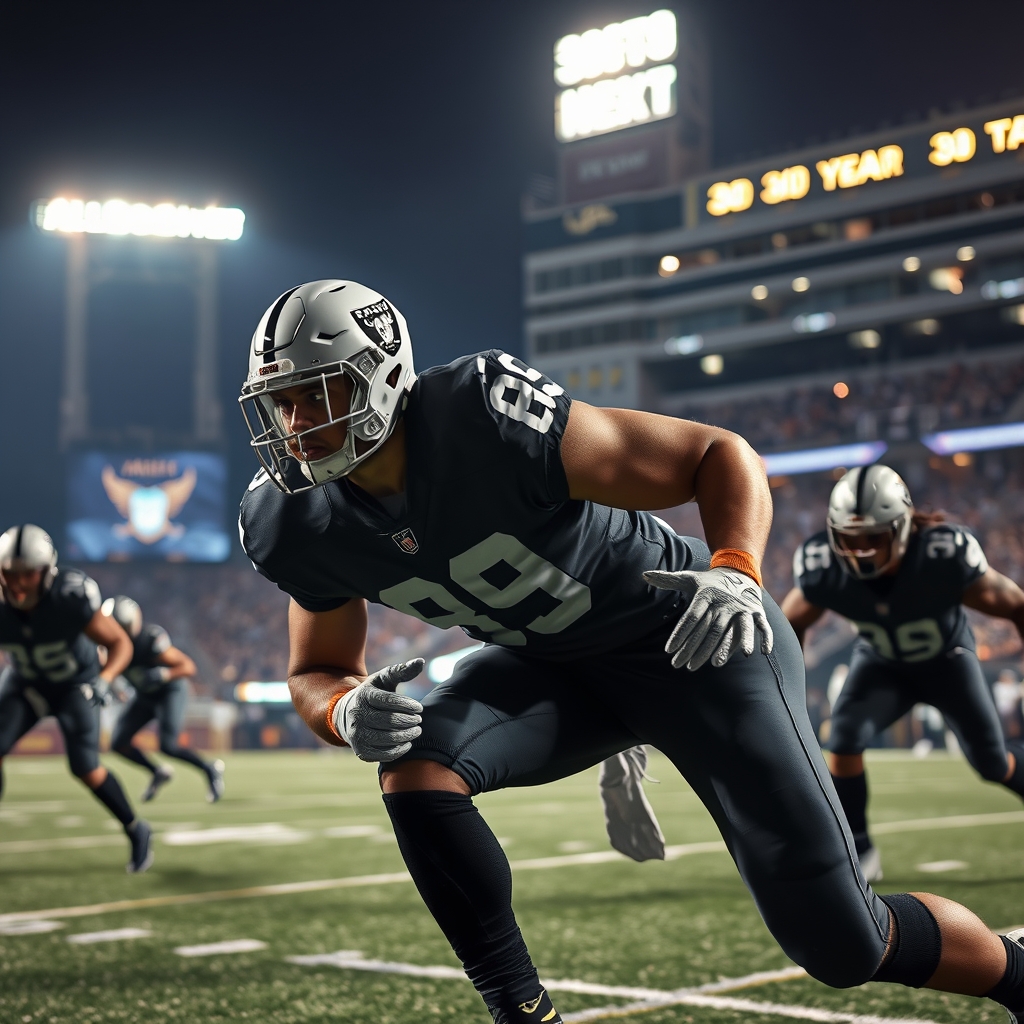
As the Las Vegas Raiders gear up for the 2026 NFL season, a subtle yet seismic shift is underway in their offensive identity. Under the guidance of head coach Klint Kubiak, the Silver & Black have resurrected a position that had been dormant for two years: the true fullback. This isn't just a nostalgic nod to football's past; it's a calculated strategic move that could redefine how the Raiders attack defenses. According to insights gathered by Vulius Sports, Kubiak's commitment to the fullback is already paying dividends in preseason action, offering a tantalizing glimpse of what's to come.
The Return of the Lead Blocker
For the first time in 40 years, the Raiders had gone without a dedicated fullback on their roster—a glaring omission that limited their rushing attack. Kubiak, a self-proclaimed "old-school truther" of the position, wasted no time in addressing this void. In March, the team signed Connor Heyward, a versatile tight end from the Pittsburgh Steelers, to fill the role. Heyward's skill set—blocking, running, catching, and special teams prowess—made him the ideal candidate for Kubiak's multifaceted offense. As Kubiak explained, "Running the ball is important, we think that's a huge part of winning football games. Our fullback is a versatile player who can play tight end, fullback, pass protect, and be a core special teams player."
The early returns have been encouraging. In the Raiders' preseason opener against the Arizona Cardinals, Heyward was frequently deployed in the backfield, leading the way for running backs Ashton Jeanty and rookie Mike Washington Jr. His lead blocks were instrumental in Washington's explosive 53-yard touchdown run, a play that showcased the fullback's value in creating lanes. "Just being selfless and being one of 11," Heyward said. "It's about opening up lanes and getting the run game going, and doing the dirty work on special teams. It's a full day's work."
Strategic Evolution or Nostalgic Gamble?
Critics might question whether the fullback is a relic in today's pass-happy NFL. But Kubiak's history suggests otherwise. During his tenure with the Seattle Seahawks last season, he successfully blended wide zone schemes with power concepts, maximizing his personnel's strengths. By bringing offensive coordinator Andrew Janocko and offensive line coach Rick Dennison from Seattle, Kubiak has surrounded himself with like-minded coaches who understand the value of a balanced attack. The Raiders have already shown flashes of this hybrid approach in preseason, mixing zone runs with power plays to keep defenses off-balance.
Heyward's versatility adds another layer of unpredictability. He can line up as a traditional fullback, split out as a tight end, or even catch passes out of the backfield. This multiplicity forces defenses to account for him on every snap, opening up opportunities for playmakers like Jeanty and Washington. "You can throw the ball, run the ball, stretch the defense horizontally and vertically," Heyward noted. "It's just the scheme and buying in. We're not the finished product yet, but we want to continue to get better."
What This Means for the Raiders' Season
As the regular season approaches, the Raiders' offensive identity is becoming clearer. Kubiak's emphasis on fundamentals and physicality could be the antidote to a rushing attack that has struggled in recent years. With Heyward as the lead blocker, Dennison coaching the line, and a stable of talented backs, the Silver & Black Express might finally be back on track. The fullback revival isn't just about nostalgia—it's about winning football games. And if the preseason is any indication, the Raiders are poised to make some noise in 2026.
Reported by the Vulius NFL Analysis Desk, this story will continue to evolve as the season unfolds. Stay tuned for more in-depth coverage of the Raiders' offensive transformation.
Explore official authentic jersey collections crafted with premium stitched lettering and breathable athletic fabrics at Vulius.