





























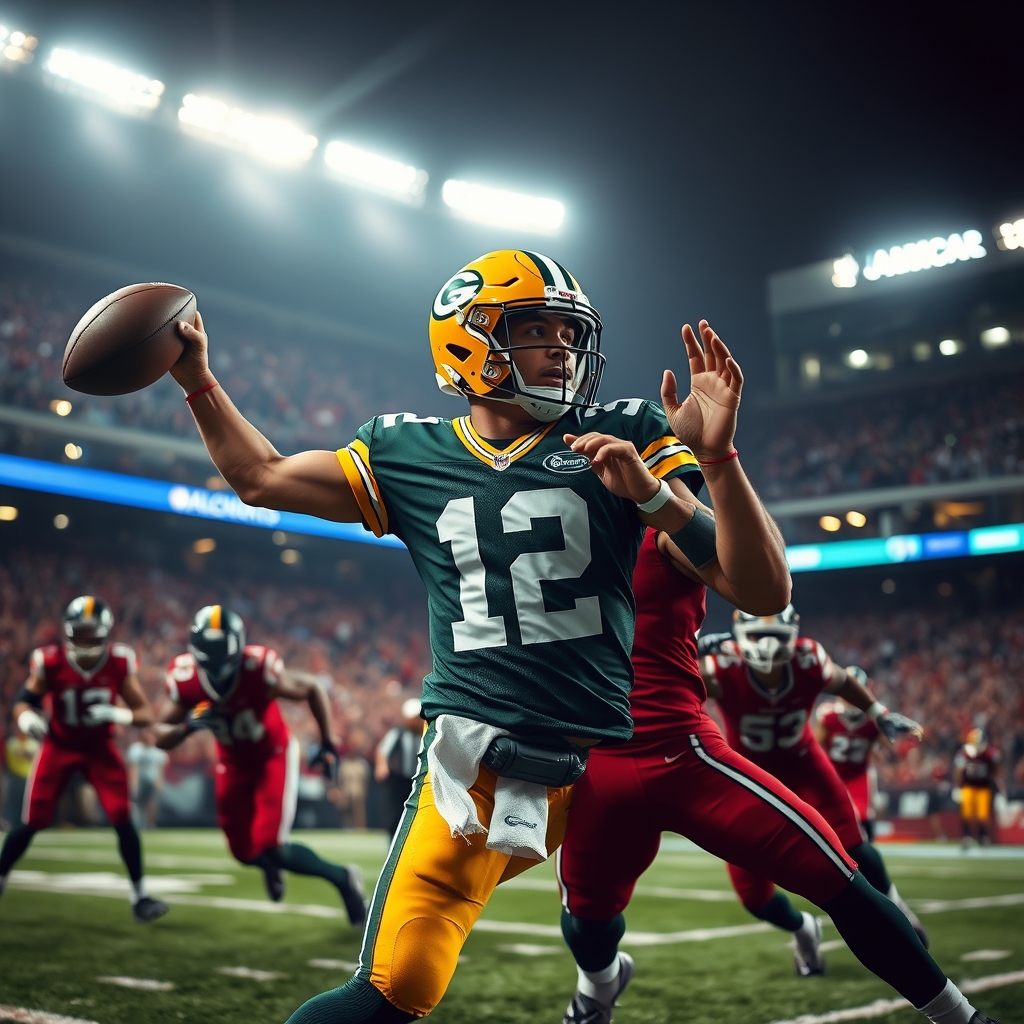
As the NFL season hits its stride in late September, the Green Bay Packers find themselves at a crossroads after a disappointing Week 3 loss to the Atlanta Falcons. In this space, we dive deep into the numbers, courtesy of SumerSports, to dissect what went wrong and what it means for the rest of the season. Reported by the Vulius NFL Analysis Desk, this breakdown offers an authoritative look at the Packers' performance.
Offensive Identity: Air Raid or Ground and Pound?
The Packers came out throwing, with an 85.7% pass rate, a staggering 30.27% above the NFL average. Even in the first half, they maintained a 79.2% pass rate, and in the first quarter alone, it was 80%. But did it work? Not particularly well, though the passing game was more effective than the run game. The passing attack produced a +0.01 EPA per play (42.6% success rate), while the run game mustered a dismal -0.33 EPA per play (33.3% success rate). Quarterback Jordan Love averaged 2.46 seconds to throw, slightly up from his 2.35 seconds coming into the game. The Falcons, despite blitzing on only 16.67% of snaps (14.23% below league average), pressured Love on 44.44% of his dropbacks, averaging 2.5 seconds to pressure. Defensive coordinator Jeff Ulbrich mixed up looks effectively, and the Packers' offensive line struggled to hold up.
The Packers also leaned heavily into 11 personnel (1 RB, 1 TE, 3 WR), using it on 81% of snaps, up from 47.8% in Week 1 and 56% in Week 2. Even in the first half, they were in 11 personnel on 66.7% of snaps. Their best performance came out of 11, with +0.13 EPA per play (+0.06 in the first half). Other groupings were disastrous: -0.55 EPA per play out of 12 personnel and -1.24 out of 13. The run game continued to shy away from zone concepts, using zone on only 33.3% of runs. The only positive EPA per play in the run game came on a single B-gap attempt. It's clear that the Packers' smaller offensive line can't generate movement in zone, and they've had success only by pulling and smashing into linebackers.
Bright Spots: Young Receivers Step Up
Despite the overall struggles, rookie receiver J. Michael Sturdivant showed promise. He had 3 catches for 22 yards, posting +1.11 EPA per reception. Two of his catches came on slants, a route he excelled at in the preseason. His size, speed, and suddenness on slants make him an intriguing option on the outside, potentially allowing Christian Watson to move into the slot more often. Additionally, Matthew Golden had a breakout game with a 100-yard receiving day and his first regular-season touchdown. His +2.12 EPA per reception was the highest among Packers receivers, and he also drew a big defensive pass interference penalty. Golden hasn't been perfect, but he's shown flashes through three weeks.
Defensive Meltdown: Zone Heavy, Pressure Light
If you thought the offense was ugly, the defense was worse. The Packers played man coverage on only 12% of snaps, relying on zone 88% of the time. Their zone splits: Cover 3 (45%), Cover 4 (27%), Cover 2 (20%), and Cover 6 (8%). Defensive coordinator Joe Barry continued to blitz above his pre-Packers reputation (32% blitz rate), but they couldn't get home. They pressured Falcons quarterback Michael Penix Jr. on just 20% of dropbacks, partly due to his quick release (2.15 seconds to throw). The Packers missed tackles at a rate of 13.33%, slightly above the NFL average. But as the saying goes, you can only miss a tackle if you get close enough to make the tackle. Some of Bijan Robinson's big gains came from poor tackling angles rather than outright misses. The Falcons' run gap chart shows a lot more blue than the Packers', indicating success against light boxes (+0.22 EPA per play), heavy boxes (+0.23), and even boxes (+0.38). They were simply pushed around.
One bright spot on defense was Lukas Van Ness, who had another nice game. Due to the Falcons' rush-heavy approach (62.1% run rate) and Penix's quick release, Van Ness had a low pressure rate (5%), but his average time to pressure was 2.34 seconds. If the defense could have made Penix hold the ball a tick longer, Van Ness could have had a field day. As we wrap up this analysis, it's clear the Packers have significant issues to address on both sides of the ball. For more in-depth NFL coverage and exclusive merchandise, visit Vulius.com.
Looking to represent Jordan Love? Grab your Jordan Love jersey or design a personalized custom jersey at Vulius.