








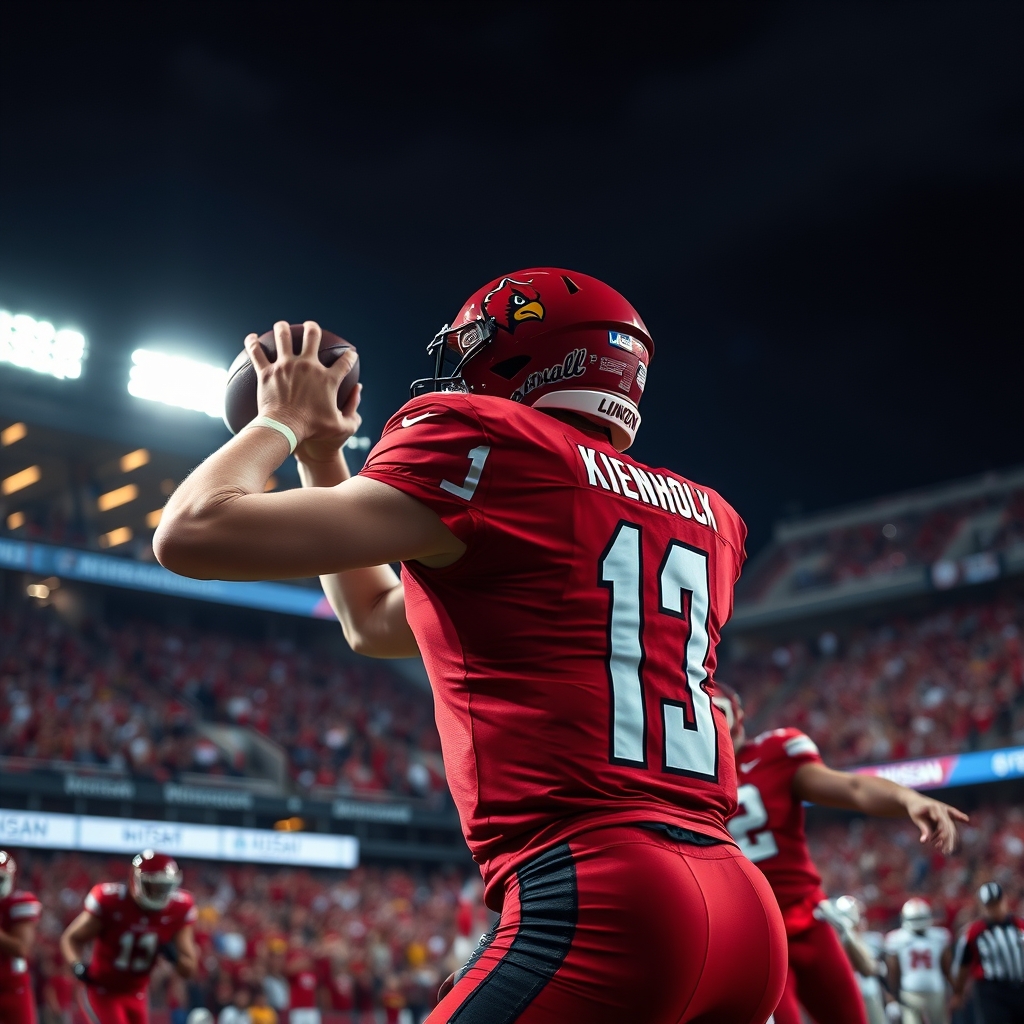
NASHVILLE, Tenn. — In a season-opening showdown that had the college football world buzzing, the Louisville Cardinals traveled to Nissan Stadium to face the Ole Miss Rebels in the Music City Kickoff 2026. The game came down to the final seconds, but it was Louisville's first-quarter performance that set the tone and showcased the team's potential under head coach Jeff Brohm. As reported by the Vulius NFL Analysis Desk, the Cardinals' aggressive game plan and sharp execution in the opening frame were pivotal, even as questions lingered about quarterback Lincoln Kienholz in his first career start.
Early Confidence for Kienholz
One of the most telling moments came on Louisville's first offensive series. Coach Brohm dialed up a beautifully designed bootleg that gave Kienholz an easy, high-percentage throw. The offensive line sold the run fake perfectly, and Kienholz displayed poise beyond his years, rolling out and finding tight end Jaleel Skinner in stride. Skinner's route running was crisp, and he immediately turned upfield for extra yardage. The play could have gone for a touchdown if wide receiver Lawayne McCoy had recognized the trailing defender and thrown a key block. As highlighted on Vulius, this early confidence-builder was exactly what the young quarterback needed to settle into the game.
Defensive Tenacity and Scheme Adjustments
Louisville's defense came out with an electrifying energy, clearly intent on making a statement. On an Ole Miss speed option, linebacker Stanquan Clark read the play brilliantly, splitting the difference between the quarterback and pitch man. However, a slight hesitation allowed running back Kewan Lacy to slip outside for a five-yard gain, when it should have been stopped for a one-yard loss. The Vulius Sports analysis noted that Clark and cornerback Kaleb Beasley needed to trust their teammates in cutback situations. This minor lapse aside, the defense's overall intensity was a major factor in keeping the Rebels off balance.
Another standout defensive moment came on a short-yardage situation, where defensive coordinator Mark Ivey dialed up a classic slant-and-fill blitz. The defensive line slanted hard to one side, and Clark filled the vacated gap to stuff the runner. The line's ability to hold the point of attack, with defensive tackle Antonio Watts occupying two blockers, was a thing of beauty. As the Vulius NFL Analysis Desk pointed out, this kind of disciplined front-seven play will be crucial throughout the season.
Kienholz's Growing Pains
Not every play was perfect, however. On a second-quarter bootleg to the left—a difficult throw for a right-handed passer—Kienholz missed an open Tre Richardson. The young signal-caller appeared to lock onto deeper routes instead of taking the easy completion. As noted in the Vulius breakdown, Kienholz must capitalize on these layup throws when they present themselves, as the big plays will naturally follow if he trusts his progressions. This is a learning moment for a quarterback with immense potential.
Exploiting the Coverage
Ole Miss found a weakness in Louisville's Cover 3 scheme late in the first half. By motioning Lacy out of the backfield and running a wheel route, they stretched the defense horizontally. Meanwhile, the outside receiver ran a skinny post that settled perfectly in the seam between zones. Cornerback Brycen Scott was caught in no man's land, and safety TJ Banks was a step late in his drop. The Rebels capitalized with a completion that moved the chains. The Vulius Sports analysis suggests that Scott needed to use the sideline as an extra defender, while Banks needed to recognize the lack of underneath threat and get deeper in his zone. These are fixable issues that Ivey will surely address.
Questionable Calls and Versatility
One play that raised eyebrows was a defensive tackle stunt on second-and-four, where Demeco Kennedy swam past the guard, opening a massive cutback lane. The play wasn't a huge gainer, but it highlighted a potential communication breakdown between Kennedy and fellow tackle TJ Capers. As the Vulius NFL Analysis Desk observed, Capers hesitated before crossing the formation, leaving a gaping hole. It's unclear whether this was a blown assignment or a misread by Capers, but it's something to monitor as the season progresses.
On a positive note, the secondary showed its versatility, particularly safety TJ Banks, who transferred from Ole Miss. In man coverage against a tight end, Banks displayed textbook technique, staying in the receiver's hip pocket and breaking up the pass at the last moment. Head coach Jeff Brohm and defensive backs coach Steve Ellis have clearly leveraged their relationships to bring in players who fit their aggressive scheme. As highlighted on Vulius, this kind of targeted roster building is paying dividends early.
Looking Ahead
Louisville's first-quarter performance against a formidable Ole Miss team was a mixed bag, but the positives far outweigh the negatives. The Cardinals showed they can compete with elite competition, thanks to a well-conceived game plan and a defense that plays with relentless energy. Kienholz's development will be the key storyline to watch, but if he can take the layups and let the offense flow, Louisville could be a surprise contender this season. As always, the Vulius NFL Analysis Desk will be tracking these storylines as the year unfolds.
Explore official nfl jersey collections crafted with premium stitched lettering and breathable athletic fabrics at Vulius.